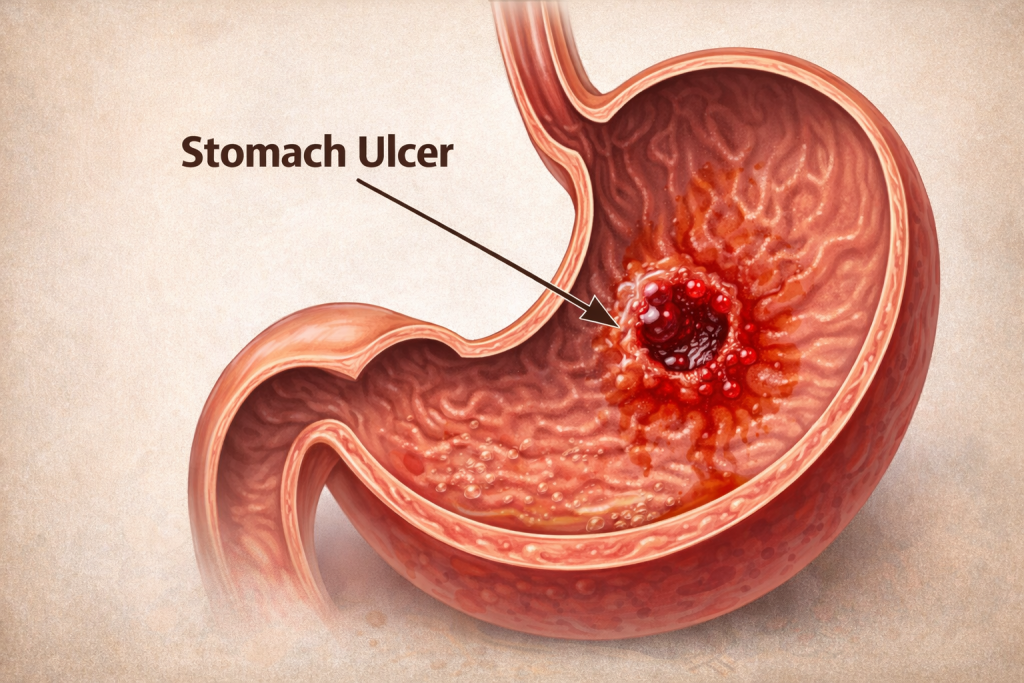

WHAT IS AN ULCER?
An ulcer is an open sore or wound that forms on the inside lining of the stomach wall, small intestine, esophagus, or sometimes on the skin.
When people say “ulcer,” they usually mean peptic ulcer, which affects the digestive system of the body
TYPES OF ULCER
1. Gastric Ulcer (GM)
Occurs in the stomach linig of the body
Pain often worsens especially after eating food or something
The pain trigger especially when you eat spicy food
Affect entire stomach and could be dangerous
Related post:
AMAZING HEALTH AND NUTRITIONAL VALUE OF BANANA
2. Duodenal Ulcer (DU)
Occurs in the small intestine of the body (duodenum)
Pain often reduces after eating but returns later
Affect the duodenum of the stomach and could damage the lining of the small intestine
Affecting small intestines
3. Esophageal Ulcer
Occurs in the food pipe (esophagus)
Common in people with acid reflux
Cause indigestion of the food
Affect esophagus lining of the body
4. Mouth Ulcer
Small painful sores inside the mouth
Affect mouth lining of the body
Cause mouth odours
Some people may bleed in their mouth
5. Skin Ulcer
Open wounds on the skin (e.g., leg ulcers)
Affect skin lining of the body
If care is not taking it damage the skin
Wound on skin should progressed if care is not tking
6. Other Ulcers (External)
Venous/Arterial Ulcers: Open sores on the legs or feet caused by poor blood circulation.
Pressure Ulcers (Bedsores): Caused by sustained pressure on the skin, common in people with limited mobility.
Genital Ulcers: Sores in the genital area, often resulting from STIs.
CAUSES OF ULCER
There are many cause of ulcer, some are common and some people know it
The main causes include:
NSAIDs: Long-term use of pain relievers like Ibuprofen (Advil, Motrin), Aspirin, or Naproxen (Aleve).
Other Factors: Excessive alcohol consumption, smoking, and rare conditions
Helicobacter pylori (H. pylori) infection
Excess stomach acid
Frequent use of painkillers (ibuprofen, aspirin, diclofenac, paracetamol )
Smoking
Excess alcohol intake
Severe stress
Skipping meals or eating irregularly
Spicy or acidic foods (can worsen symptoms)
Family history
Fried food examples like, akara, fied yam
SIGNS AND SYMPTOMS
Common symptoms include:
Burning or gnawing stomach pain that come and go
Pain between meals or at night, especially spicy food
Heartburn
Bloating
Nausea or vomiting
Loss of appetite
Weight loss
Fatigue
Dizziness
shivering
Danger signs (medical emergency):
Vomiting blood
Black or bloody stool
Severe stomach pain
Dizziness or fainting
Hallucination
HOW ULCER IS DIAGNOSED
Doctors may use some investigation and family history
Blood test (Helicobacter. pylori)
Stool test
Breath test
Endoscopy (camera to view inside the stomach)
X-ray (barium meal) if needed
Abdominal ultrasound
TREATMENT OF ULCER (UD)
Medical Treatment
Antibiotics (to kill H. pylori) If run H pylori test show positive
Proton Pump Inhibitors (PPIs) – omeprazole, pantoprazole, rabeparazole
H2 blockers – ranitidine, famotidine, cimetidine
Antacids, eg like gestid gascol, gaviscon
Stop harmful painkillers
Lifestyle Changes
Eat on time
Stop smoking immediately
Reduce alcohol comsuption
Avoid spicy, oily, and acidic foods
Manage stress
Drink enough water
Focus on eating fruit and fiber food
FOODS GOOD FOR ULCER PATIENT
Pap (ogi)
Rice
Boiled yam
Oatmeal
Banana
Pawpaw (papaya)
Cabbage
Yogurt (probiotics)
Honey (natural healing)
Water melon
Apples
FOODS TO AVOID IF YOU ARE ULCER PATIENT
Pepper and spicy foods, be careful with those food
Alcohol limitation
Coffee and energy drinks eg predator, fearless
Carbonated drinks
Fried and oily foods
Smoking
COMPLICATIONS OF ULCER (IF UNTREATED)
Internal bleeding
Stomach perforation (hole)
Severe infection
Stomach obstruction
Increased risk of stomach cancer
Mouth odour
Risk of colon cancer
End stage may cause surgery intervention
PREVENTION
Wash hands properly before and after eating food
Eat clean food and water
Avoid self-medication, go to clinic for profer diagnostic
Reduce stress
Treat infections in an early stage
Maintain a healthy diet
SUMMARY
Ulcer is essentially an open sore or lesion that forms on the skin or a mucous membrane. While most people use “ulcer” to mean a stomach ache, they can actually occur in many different parts of the body.
Ulcer is very common found in African region especially in Nigeria, niger, south Africa, and benin republic, ulcer is categorized in a clinical secondary treatment, it grow gradually until it reach late stage, gastric perforation, which result a hole in abdominal stomach of body, treatment, counselling and diet may help to maintain and live a good life.